
Understanding the education, credentials, and philosophies behind two approaches to personalized healthcare.
If you've been researching holistic healthcare, you've probably encountered the terms naturopathic medicine and functional medicine. Both emphasize individualized care, nutrition, lifestyle, prevention and underlying causes that may contribute to chronic health concerns. So, are they the same thing?
Not quite!
Although the two approaches can overlap, there are important differences in education, professional qualifications and our philosophies. Understanding these distinctions can help you make informed decisions about your healthcare.
At Willowbrook Health Center, we believe that an informed patient is an empowered patient. Let's explore what sets these approaches apart. And keep reading for my Hot Take on the subject.
What Is a Naturopathic Physician?
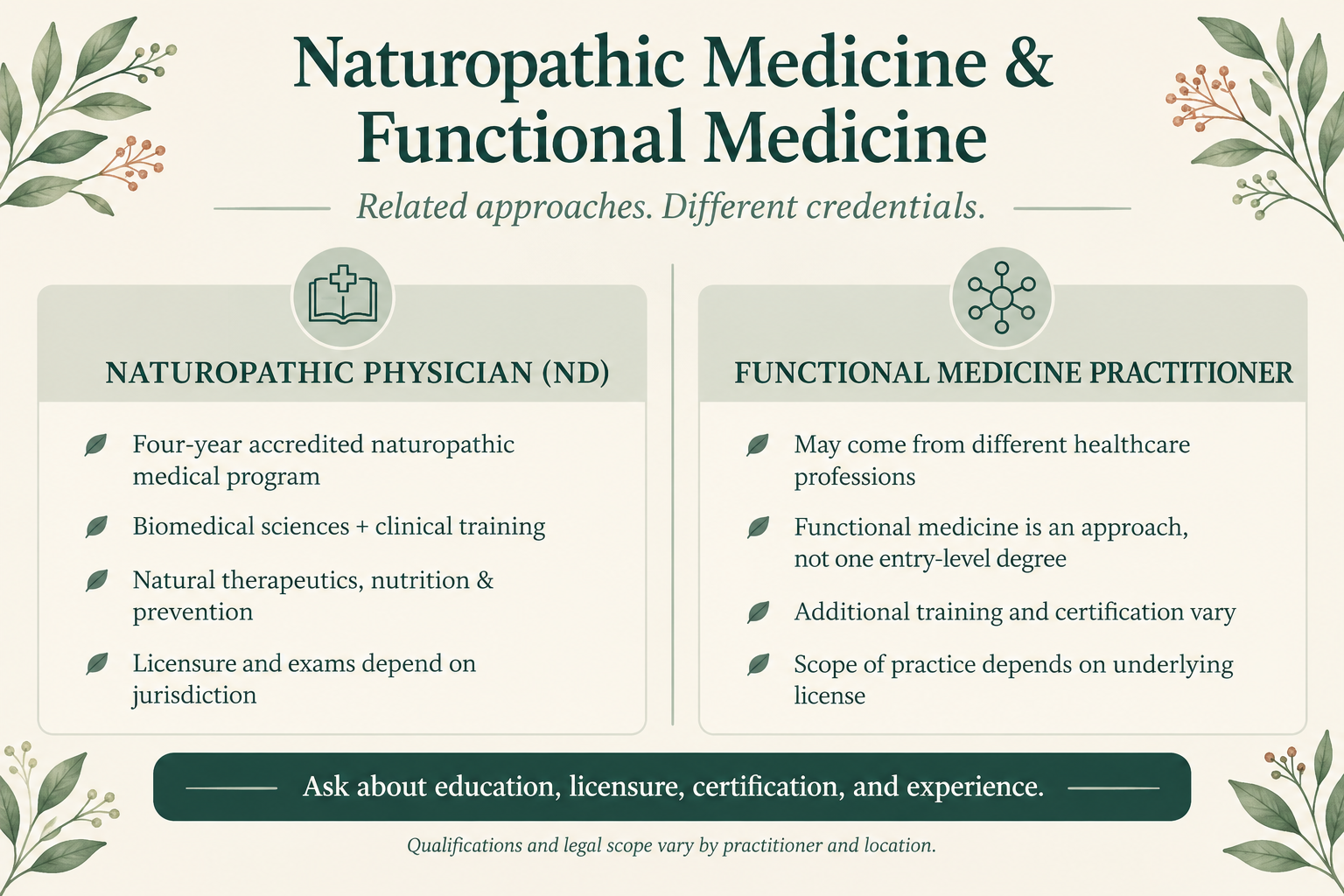
A Naturopathic Physician (ND) completes a rigorous, graduate-level medical education at an accredited naturopathic medical school. In the United States, these programs typically require four years of professional study following a Bachelor’s Degree and some prerequisite college coursework.
The curriculum includes biomedical sciences such as anatomy, physiology, biochemistry, pathology, microbiology, immunology, and pharmacology, along with clinical diagnosis and laboratory medicine.
Along with traditional training, a naturopathic doctoral student has multiple semesters focused on clinical nutrition, botanical medicine, hydrotherapy and homeopathy.
In states that license naturopathic physicians, graduates must meet the applicable examination and licensing requirements. Here in Connecticut, that includes the 2 sets of Naturopathic Physicians Licensing Examinations (NPLEX) and state-specific requirements like the licensure exam and continuing education.
Naturopathic medicine is both a professional education and a philosophy of healthcare. It provides a foundation for evaluating health concerns while considering the whole person, prevention, and a range of therapeutic approaches.
What Is a Functional Medicine Practitioner?
Functional medicine is a clinical approach rather than a single entry-level medical degree.
Functional medicine practitioners may come from several healthcare backgrounds, including allopathic medicine, nursing, nutrition, chiropractic or physical therapy. Some pursue additional functional medicine education or certification to develop expertise in this approach.
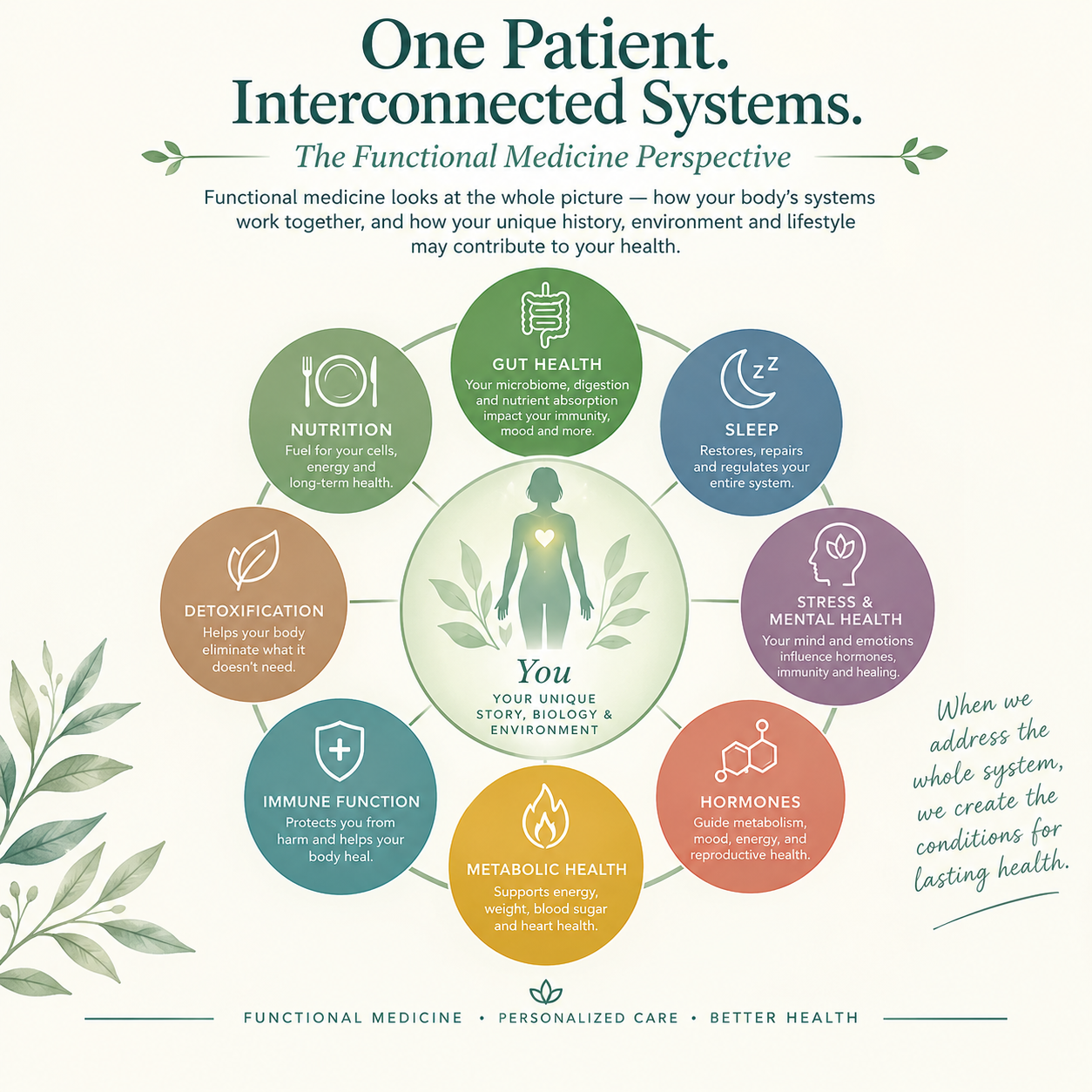
Functional medicine focuses on understanding the relationships among the body's interconnected systems. Practitioners may examine how nutrition, sleep, stress, environmental exposures, genetics, gastrointestinal health, and metabolic function relate to a patient's symptoms and medical history.
Some practitioners complete formal certification through the Institute for Functional Medicine and the International Board of Functional Medicine Certification. These credentials demonstrate additional training and assessed competency, but they do not replace a practitioner's original professional qualifications or expand their legal scope of practice.
The important distinction: A functional medicine practitioner may have extensive medical training, but the title alone doesn't tell you their original education, professional license, or clinical authority.
Comparing the Qualifications
The Philosophy of Naturopathic Medicine: Six Guiding Principles
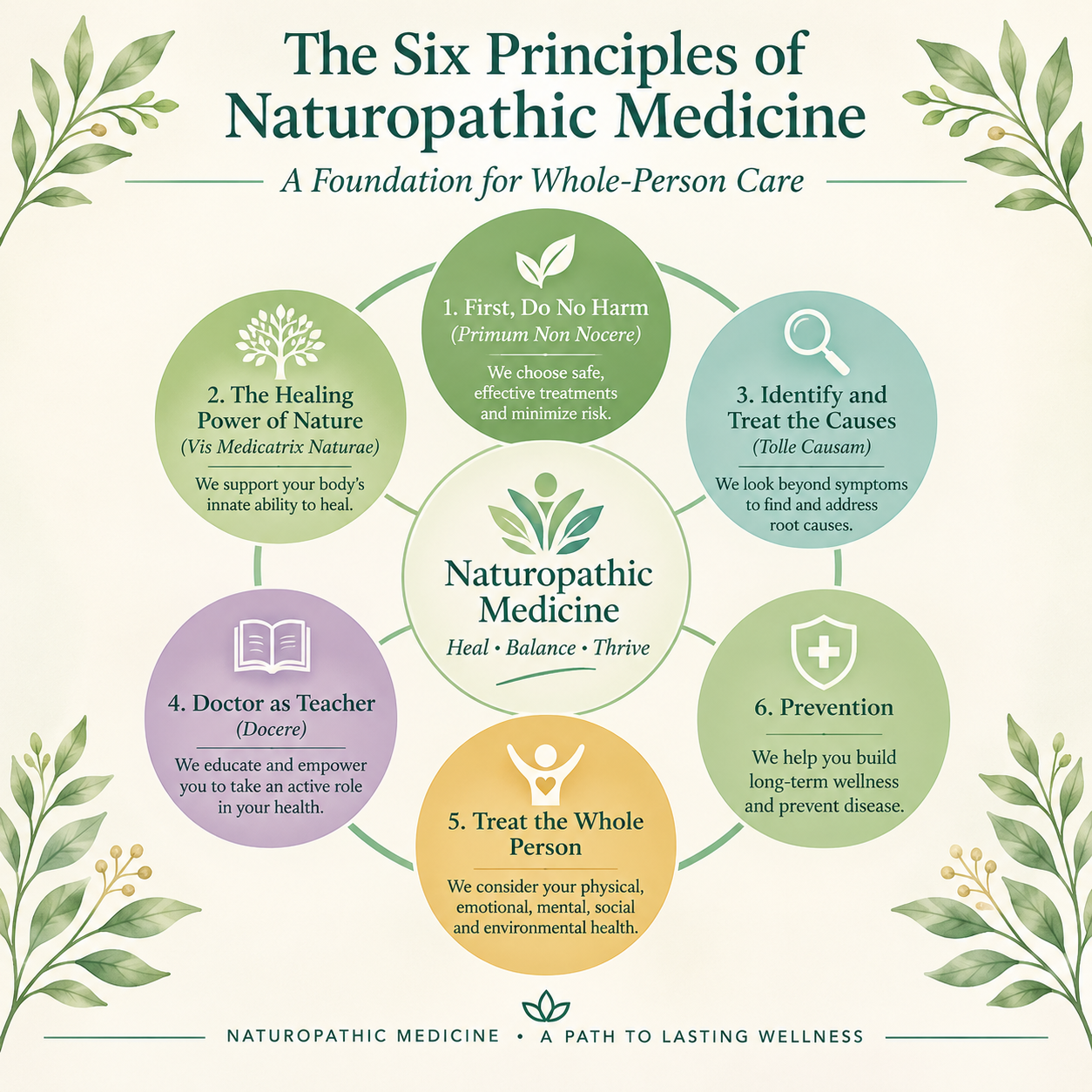
One of the distinctive features of naturopathic medicine is its foundation in six principles. These principles are sworn upon during graduation and shape how naturopathic physicians approach patient care. And yes, we had to learn them in Latin, too!
1. First, Do No Harm (Primum Non Nocere)
We aim to choose appropriate, effective interventions while minimizing unnecessary risk and considering the potential benefits and harms of treatment.
2. The Healing Power of Nature (Vis Medicatrix Naturae)
We recognize the body's capacity for healing and recovery and seek to support those processes while addressing conditions that require medical intervention.
3. Identify and Treat the Causes (Tolle Causam)
Rather than focusing exclusively on symptoms, we investigate potential contributors to illness and consider which factors can be meaningfully addressed.
4. Doctor as Teacher (Docere)
Education is central to naturopathic care. We want patients to understand their health, participate in their treatment decisions, and develop the knowledge and confidence to care for themselves.
5. Treat the Whole Person (Tolle Totum)
Health is influenced by many interconnected factors. We consider the individual's physical health, emotional wellbeing, lifestyle, environment and personal circumstances.
6. Prevention (Preventare)
We work to identify risk factors, support healthy habits and help patients maintain wellbeing over the long term.
These principles provide a philosophical foundation that goes beyond any single test, supplement, or treatment modality.
The Philosophy of Functional Medicine
Functional medicine has its own distinctive framework, centered on systems biology and individualized assessment.
Practitioners seek to understand how different biological systems interact and how a person's history, environment, lifestyle and physiology may contribute to illness.
For example, like a Naturopathic Doctor, when evaluating persistent fatigue, a functional medicine practitioner might consider thyroid function, iron status, sleep quality, nutrition, medication effects and other clinically relevant factors.
The approach encourages clinicians to look for meaningful relationships among symptoms and systems rather than viewing every concern in isolation.
This framework can be valuable when applied thoughtfully. However, identifying a possible mechanism is not the same as proving that it caused a patient's symptoms. Testing and treatment should be guided by clinical evidence, patient needs, safety and established standards of care.
Where the Two Approaches Overlap
Naturopathic and functional medicine can share many practical strategies, including:
Individualized nutrition and lifestyle counseling
Investigation of potential contributors to chronic health concerns
Appropriate laboratory testing
Attention to gastrointestinal, endocrine, immune, and metabolic health
Personalized treatment plans
Prevention and patient education
Collaboration with other healthcare professionals
A naturopathic physician may incorporate functional medicine training into their practice. Likewise, a physician or another qualified healthcare professional may use functional medicine without having a naturopathic medical degree.
The approaches are not mutually exclusive.

Let's Talk Shop - The Wild, Wild West of Wellness: A Naturopathic Physician's Perspective
The holistic medical field has changed A LOT since I graduated from medical school in 2016. I remember my business coach at the time predicting that there would be a massive ‘boom’ for the industry in 2020. And he was right. Before then, you’d have to go to a health food store to get vitamins and forget about herbs. You’d have to hunt those down. Now every Tom, Dick and Harry has a supplement company, anyone (even the patient themselves) can order lab testing and anyone with a smidgen of medical training thinks they are experts in nutrition, herbs and vitamins.
In my experience, I have seen:
Functional medicine practitioners marketing themselves as having equivalent training to NDs, MDs, or DOs.
Practitioners recommending extensive laboratory testing or supplements without sufficient clinical context.
A lack of foundational knowledge in anatomy, physiology, pathology or drug-herb interactions.
Functional medicine practitioners trying to use concepts that have been part of naturopathic medical education for decades, but missing the mark entirely because they weren’t properly trained in our philosophies (nor do they live by them).
We also need to remember that more isn’t better. You don’t need to be on 27 supplements. You don’t need to be on a strict Keto/Carnivore/Vegan diet. And you don’t need every test ever created. Naturopathic medicine isn't a collection of supplements, laboratory tests, dietary protocols, and trendy wellness practices. It's a medical education and a philosophy of care. We need to get back to our true selves - our selves that are close to our intrinsic bio-rhythms, that are in tune with nature and are, well, happy.
What we need to keep in mind as we move forward as a culture is that these things take extensive training and the intricacies of them can’t be ignored.
A Note About My Perspective: The following reflects my personal experiences and professional observations as a licensed Naturopathic Physician. Functional medicine practitioners come from a variety of educational and clinical backgrounds, and their training, experience, and approaches can vary considerably. My intention is not to diminish the work of other healthcare professionals, but rather to help patients better understand the differences in education, credentials, and clinical philosophy.
Why Your Practitioner's Qualifications Matter
When choosing a healthcare provider, look beyond the terminology used on a website or business card.
Ask questions such as:
What professional degree did you earn?
Where did you complete your clinical training?
Are you licensed in your profession and state?
What additional certifications have you completed?
What is your experience treating my particular health concern?
How do you evaluate the evidence, risks, and benefits of your recommendations?
How do you coordinate care with other members of my healthcare team?
Many of these should be answered in their bio or ‘About’ pages. If you don’t see it on their website, this might be a red flag.
And keep in mind, in unlicensed states, any Joe Smo can call themself a “Naturopath”. Make sure they went to one of the 7 accredited Naturopathic Doctoral Schools. (This is a blog for another time).
A Whole-Person Approach at Willowbrook Health Center
At Willowbrook Health Center, we believe that good healthcare starts with listening, education, and understanding each person as an individual.
Naturopathic medicine offers a distinctive combination of biomedical education, natural therapeutics, preventive care, and a philosophy that places the patient at the center of the healing process.
Ultimately, the goal is not simply to choose a label. It is to find knowledgeable healthcare professionals who listen carefully, use evidence-informed approaches, recognize the limits of their expertise, and work with you (and your budget!) toward better health.
Your health deserves thoughtful, individualized care—and you deserve to understand the qualifications of the people providing it.
Have questions about naturopathic medicine or our services? Contact Willowbrook Health Center to learn more about our approach to whole-person wellness.
References and Further Reading
Council on Naturopathic Medical Education — Naturopathic Education
Connecticut Department of Public Health — Naturopathic Physician Licensing Requirements
Institute for Functional Medicine — Certification Eligibility
International Board of Functional Medicine Certification — Credentials
This article is for educational purposes and is not a substitute for individualized medical advice. Naturopathic scope of practice and licensing requirements vary by jurisdiction.